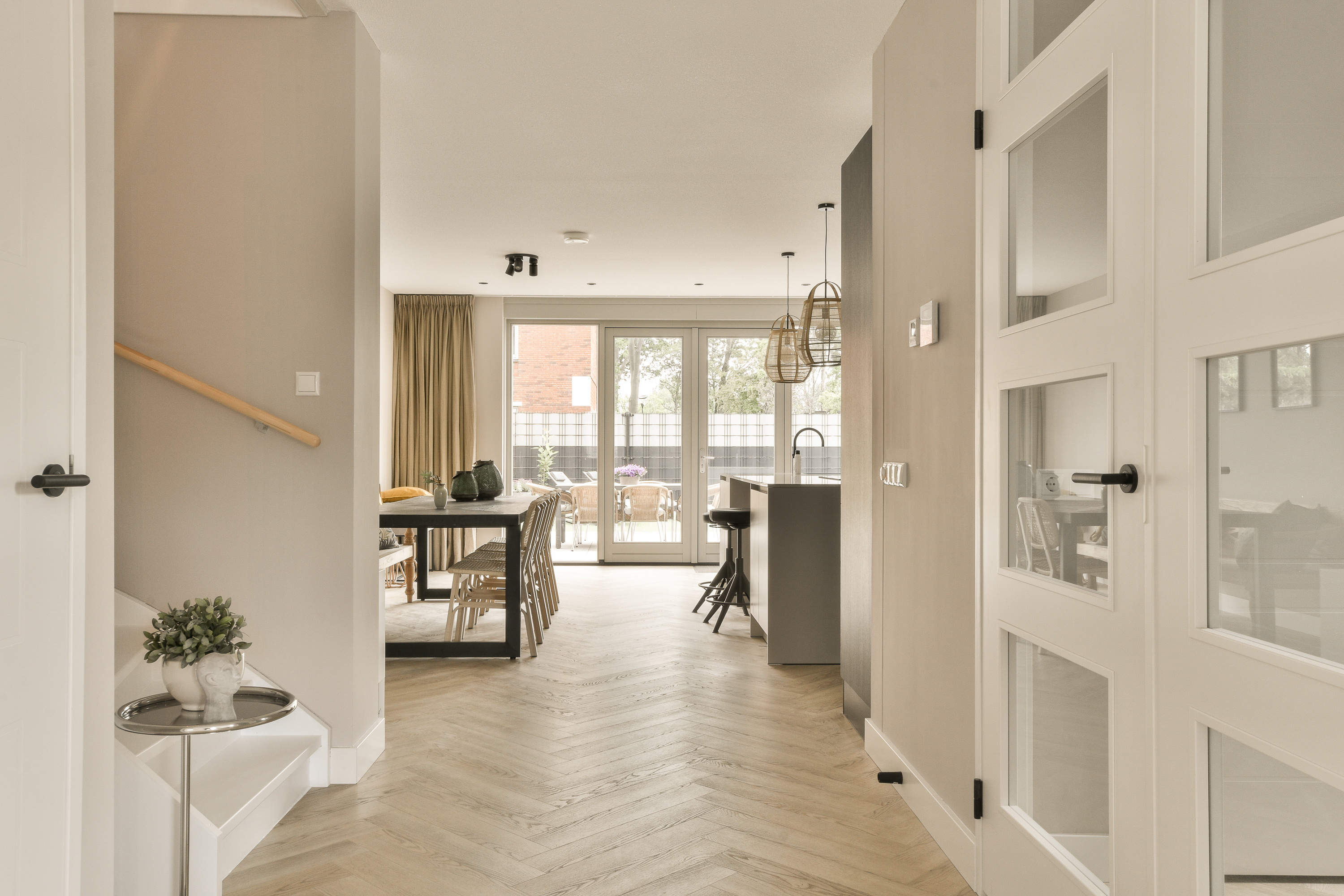
Hardwood flooring brings natural character to a home, with grain patterns, color variations, and a finish that can complement traditional or contemporary interiors. When you start comparing options, one of the biggest decisions is whether to choose solid hardwood flooring or engineered hardwood flooring.
Both feature real wood, but their construction affects how they respond to moisture, where they can be installed, and how they may be maintained over time. The best option depends on your home's conditions, the room you are updating, and your long-term plans. Understanding the differences can help you choose a floor that looks right and performs well in everyday life.
How Solid Hardwood Flooring Is Constructed
Solid hardwood flooring is made from a single piece of wood. Boards are milled from species such as oak, maple, or hickory, then finished to create the appearance and protection you want. Because the plank is wood throughout, it can often be sanded and refinished multiple times over its useful life, depending on its thickness and condition.
This construction appeals to homeowners who value traditional wood flooring and the possibility of renewing its appearance years later. Solid hardwood is generally best suited to appropriate above-grade spaces where moisture conditions can be controlled.
Wood naturally expands and contracts as humidity changes.
In Northern Virginia, seasonal shifts between humid summers and drier indoor heating conditions can affect wood flooring. Maintaining stable indoor humidity and following acclimation and installation guidelines can help reduce excessive movement.
Why Engineered Hardwood Offers More Flexibility
Engineered hardwood flooring has a real-wood veneer on top of a layered core. The layers are arranged to help the plank remain dimensionally stable as conditions change. Although engineered products still respond to moisture, their construction can make them less prone to certain forms of movement than solid wood.
This design can make engineered hardwood suitable for installation locations where solid hardwood may be less appropriate, including some below-grade or concrete-subfloor applications. Suitability depends on the specific product, subfloor, moisture conditions, and installation method.
The thickness of the real-wood wear layer matters. Some engineered floors can be refinished, while others allow limited refinishing or none at all. Ask the manufacturer about veneer thickness, sanding recommendations, and warranty requirements rather than assuming every engineered floor can be renewed in the same way.
Compare Moisture Needs and Installation Conditions
Neither solid nor engineered hardwood should be treated as waterproof. Standing water, plumbing leaks, excessive humidity, or moisture coming from a subfloor can damage either type. The difference is how each construction responds under particular conditions, not whether one can safely ignore moisture.
Before installation, the subfloor should be evaluated for moisture and flatness. Solid hardwood is commonly installed using methods suited to approved wood subfloors, while engineered flooring may support a wider range of installation systems. Always follow the flooring manufacturer's instructions and use qualified installation guidance when the project involves concrete, below-grade rooms, or unusual moisture conditions.
Consider the room's everyday use as well. Entryways may need mats to catch wet shoes, while kitchens benefit from quick spill cleanup. Good moisture management protects your investment regardless of which hardwood construction you choose.
Think About Refinishing, Appearance, and Long-Term Value
Solid hardwood may appeal to homeowners who want a floor that can be refinished repeatedly as tastes change or wear accumulates. Engineered hardwood can also offer long-term value, but refinishing potential varies by product. If renewing the floor decades from now is a priority, compare the wear-layer thickness and manufacturer's guidance before purchasing.
Appearance deserves equal attention. Both categories are available in a range of wood species, plank widths, colors, textures, and surface treatments. Wider planks and natural-looking finishes may appeal to homeowners exploring hardwood flooring trends 2027, but trends should complement the home's architecture rather than dictate the decision.
Look at full-size samples when possible. Lighting, wall color, and nearby cabinetry can change how a wood tone appears. A finish that looks balanced in one room may feel much warmer or cooler in another.
Find the Hardwood Flooring That Fits Your Home
Solid and engineered hardwood can both provide the warmth and character of real wood. Solid hardwood may suit above-grade spaces where conditions are well controlled and future refinishing is important. Engineered hardwood flooring may offer greater flexibility for certain subfloors and installation locations. Your room, moisture conditions, and preferred maintenance plan should guide the final choice.
If you're planning a flooring update, Flooring America Fairfax can help you explore options that complement your home's style and practical needs. Homeowners in Fairfax, VA and across Fairfax Station, Oakton, Vienna, Burke, Centreville, Chantilly, Annandale, Merrifield, and Dunn Loring, VA can contact us today to discuss their project and the choices worth considering. Visit our showroom to compare wood tones, plank styles, and finishes in person. Seeing samples in your own design context can help you choose hardwood flooring that feels right for your home now and remains appealing for years to come.